Maximizing ROI with Advanced Track Welding Technologies
Understanding Track Welding Technologies
Overview of Track Welding
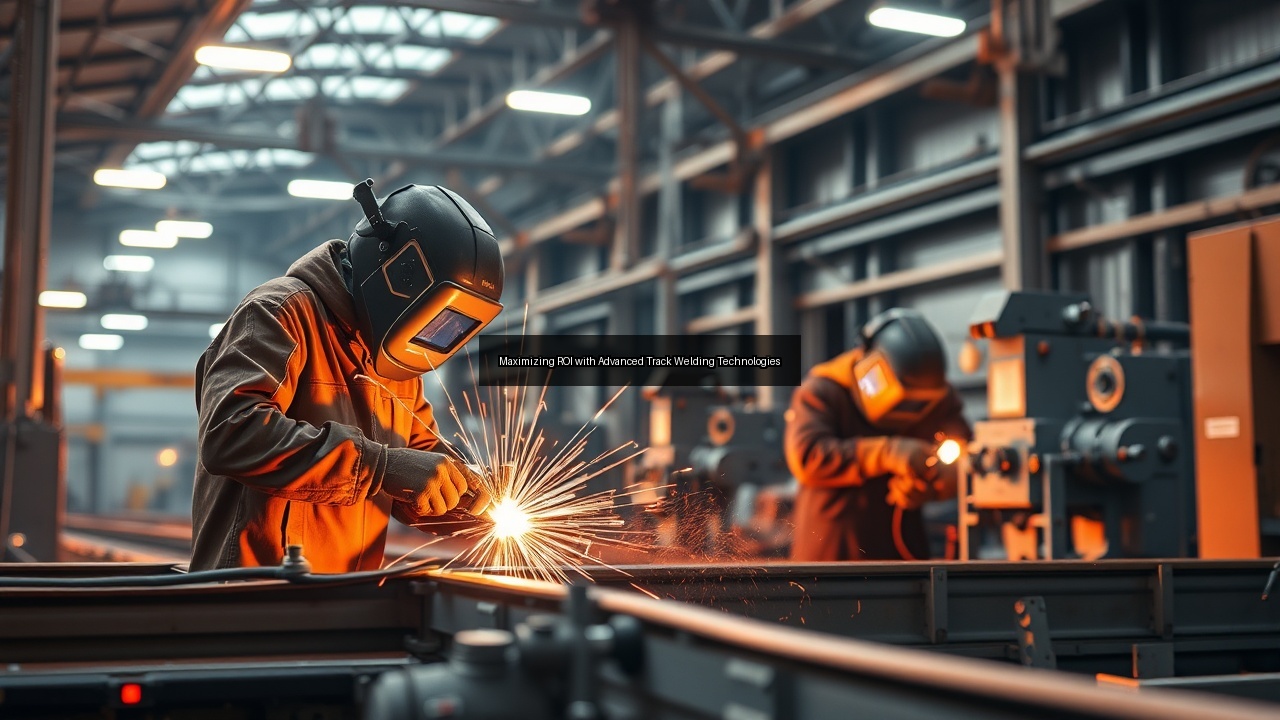
Track welding delivers precise joins along linear paths in heavy fabrication and rail work. Operators rely on a track welder to maintain consistent speed and torch angle while moving across long seams. A dedicated track welding machine guides the welding head along rigid rails, which eliminates manual drift and produces uniform beads every time. Companies that invest in a machine for track welding report fewer defects and faster project cycles. Track welders handle both straight runs and slight curves when equipped with proper rail sections. The process suits structural steel, pressure vessels, and shipbuilding where weld integrity determines service life. Proper setup includes matching travel speed to material thickness and electrode type for optimal fusion without overheating the base metal.
Key Components of Track Welders
Modern track welders integrate several critical parts that work together for reliable performance. The oscillator controls side-to-side movement of the torch, creating the oscillation pattern needed for wider weld pools on thick joints. Adjustable electrodes feed filler wire steadily into the arc zone, while a ceramic backing strip supports the root pass and prevents burn-through. Drive motors advance the carriage along the rail at programmable speeds. A connecting rod links the oscillator mechanism to the torch holder, ensuring smooth lateral motion without vibration. Power sources supply stable current for either MIG or submerged-arc processes. Wire feeders maintain tension on the consumable wire to avoid bird-nesting during long welds. These elements combine to deliver repeatable results across multiple shifts.
Types of Track Welding Machines
Track welding machines appear in several configurations to match job requirements. Portable models clamp directly onto the workpiece and suit field repairs on pipelines or storage tanks. Fixed gantry systems handle large plate fabrication in shop environments. Submerged-arc units deliver high deposition rates for thick sections, while gas-metal-arc versions offer greater flexibility for thinner materials. Some machines incorporate dual torches for simultaneous welding on both sides of a joint. Rail length and curvature options range from straight three-meter sections to flexible tracks that conform to contoured surfaces. Selection depends on material grade, joint type, and production volume. Each type improves consistency compared with manual welding methods.
Benefits of Advanced Track Welding Machines
Increased Efficiency and Speed
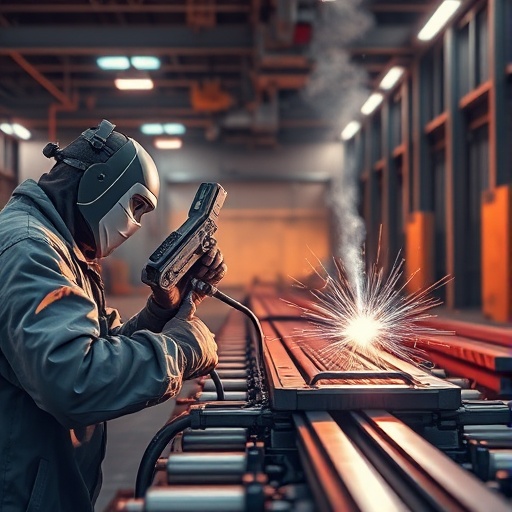
Advanced track welding machines raise travel speeds while maintaining bead quality. Automated guidance removes the need for constant operator adjustments, allowing welders to complete seams in less time. Oscillation settings optimize weave width for each pass, reducing the total number of layers required. Multi-process heads switch between processes without downtime for reconfiguration. Shops that deploy these machines report throughput gains of thirty percent or more on repetitive linear joints. Reduced setup time between welds further compounds the efficiency advantage. Operators focus on monitoring rather than guiding, which lowers fatigue and supports longer continuous runs.
Enhanced Weld Quality
Consistent torch angle and travel speed produce welds with superior mechanical properties. The controlled oscillation pattern distributes heat evenly, minimizing distortion and residual stress. Precise wire feed ensures uniform filler metal addition, resulting in fewer inclusions or lack-of-fusion defects. Digital controls store proven parameters for different joint configurations, enabling repeatable quality across shifts. Track welding equipment also maintains correct arc length even on slightly uneven surfaces, which protects against undercut. Post-weld inspection shows cleaner profiles that often require less grinding. Higher quality directly supports code compliance and extends component service life.
Reduction of Material Waste
Accurate guidance limits excess weld metal and reduces rework. Ceramic backing allows full penetration without excessive root reinforcement, conserving filler wire and electrodes. Programmable travel speeds prevent overwelding that wastes consumables. Fewer rejected joints mean less scrap metal and lower disposal costs. Optimized oscillation widths match the joint preparation exactly, avoiding unnecessary buildup. Shops track consumable usage per meter and observe measurable drops after switching to automated track systems. The savings accumulate quickly on high-volume production runs.
Maximizing ROI with Track Welding Technologies
Calculating Return on Investment
Return on investment calculations begin with comparing equipment purchase price against labor and consumable savings. Track the reduction in weld time per joint and multiply by hourly labor rates to quantify productivity gains. Factor in fewer repairs and lower scrap rates from improved quality. Include energy efficiency of modern power sources and decreased electrode waste. Most operations recover costs within twelve to eighteen months when machines operate near capacity. Track cumulative output over three years to capture full return on investment. Accurate data logging from the welding machine supports precise projections and helps justify future purchases.
Cost-Effective Equipment Choices
Selecting the right track welding machine requires balancing features against budget. Entry-level models with basic oscillation provide solid gains for smaller shops. Larger operations benefit from programmable controls and dual-torch capability even at higher initial cost. Evaluate rail system versatility and spare-part availability before purchase. Machines that accept multiple welding processes offer greater utilization across projects. Compare total cost of ownership, including maintenance intervals and consumable compatibility. Leasing options or certified used equipment can lower upfront outlay while still delivering advanced performance.
Long-Term Savings with Advanced Machines
Advanced track welders continue delivering value years after installation through durability and upgrade paths. Robust carriages and sealed electronics resist shop dust and extend service intervals. Modular designs allow later addition of automation features without full replacement. Reduced welder fatigue supports retention and lowers training expenses. Consistent weld quality decreases warranty claims and improves customer satisfaction. Over a decade, cumulative savings on labor, materials, and downtime often exceed the original equipment investment several times. Regular maintenance preserves these advantages and protects the return on investment.
Gullco International's Innovations in Track Welding
Overview of Gullco's Track Welding Equipment
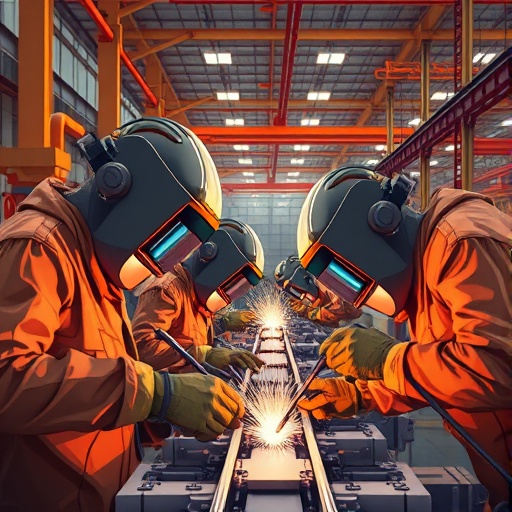
Gullco International manufactures a complete line of track welding equipment designed for industrial reliability. Their systems combine rigid rail sections with motorized carriages that carry torches or cutting heads. Gullco track welders accommodate both manual and automated operation, giving fabricators flexibility. Standard packages include power supplies matched to the carriage drive for synchronized performance. The company supplies rails in multiple lengths and configurations to suit straight seams, circular paths, and overhead applications. Customers worldwide use Gullco machines in shipyards, pressure vessel shops, and structural steel plants. Support includes training and spare parts availability that keeps equipment productive.
Innovative Features of Gullco Track Welders
Gullco track welders incorporate digital oscillators that let operators dial in precise weave patterns and dwell times. Integrated wire feeders maintain consistent tension on electrodes and filler wire across long runs. Ceramic guide inserts protect rails from spatter while allowing smooth carriage travel. Quick-release clamps speed rail setup and repositioning between joints. Some models feature remote pendants that enable parameter changes without stopping the weld. The connecting rod assembly in the oscillator head delivers smooth lateral motion with minimal backlash. These features combine to produce high-quality welds with minimal operator intervention.
Comparative Analysis with Competitors
Gullco equipment stands out through build quality and service support compared with lower-cost alternatives. Competitors often use lighter gauge rails that flex under load, causing inconsistent torch height. Gullco carriages maintain alignment even on vertical or overhead surfaces. Oscillation controls offer finer adjustment ranges than many imported units. Parts availability and technical documentation reduce downtime when maintenance is required. While initial pricing may exceed basic models, the combination of reliability and weld quality produces stronger long-term economics. Fabricators who compare total cost of ownership frequently select Gullco track welding machines for critical projects.
Future Trends in Track Welding
Emerging Technologies in Welding Machines
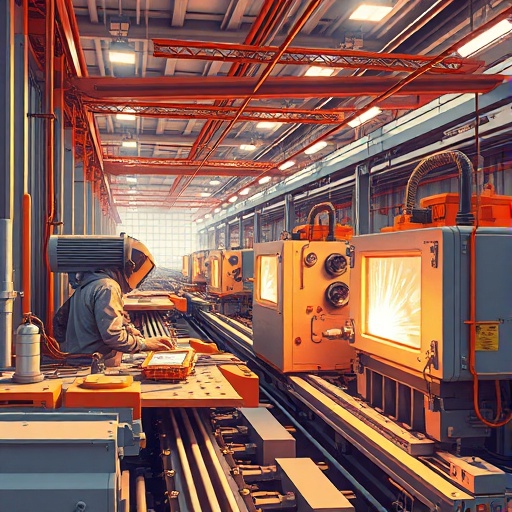
New welding machines incorporate sensors that monitor arc voltage, current, and wire speed in real time. Data analytics flag deviations before defects form, allowing immediate correction. Laser-assisted tracking systems keep the torch centered on the joint even when fit-up varies slightly. Hybrid power sources combine processes for optimized deposition and heat input. These developments increase the capability of track welders on demanding alloys and complex geometries. Continued miniaturization of controls reduces carriage weight without sacrificing function. Shops adopting early gain competitive edges in quality and speed.
The Role of Automation in Track Welding
Automation transforms track welding from a skilled manual task into a repeatable, data-driven process. Robotic carriages follow preprogrammed paths and adjust parameters on the fly based on sensor feedback. Integration with plant networks allows production tracking and predictive maintenance scheduling. Operators shift from torch handling to oversight and exception management. Automated oscillation and wire feed reduce variability between shifts. The result is higher throughput with consistent quality across large fabrications. Track welding equipment with these capabilities supports lights-out operation in some facilities.
Sustainability and Eco-Friendly Options
Modern track welding machines improve sustainability through lower energy use and reduced consumable waste. Efficient inverters cut power draw compared with older transformers. Precise control of wire and electrodes minimizes excess material that ends up as scrap. Ceramic backing systems support complete joint penetration without added filler. Fume extraction integrated into the carriage captures emissions at the source. Manufacturers now offer machines compatible with recycled filler metals. These advances help facilities meet environmental targets while maintaining productivity and lowering operating costs over time.