Choosing the Right Submerged Arc Welder for Your Metal Projects
Understanding Submerged Arc Welding (SAW)
What is Submerged Arc Welding?
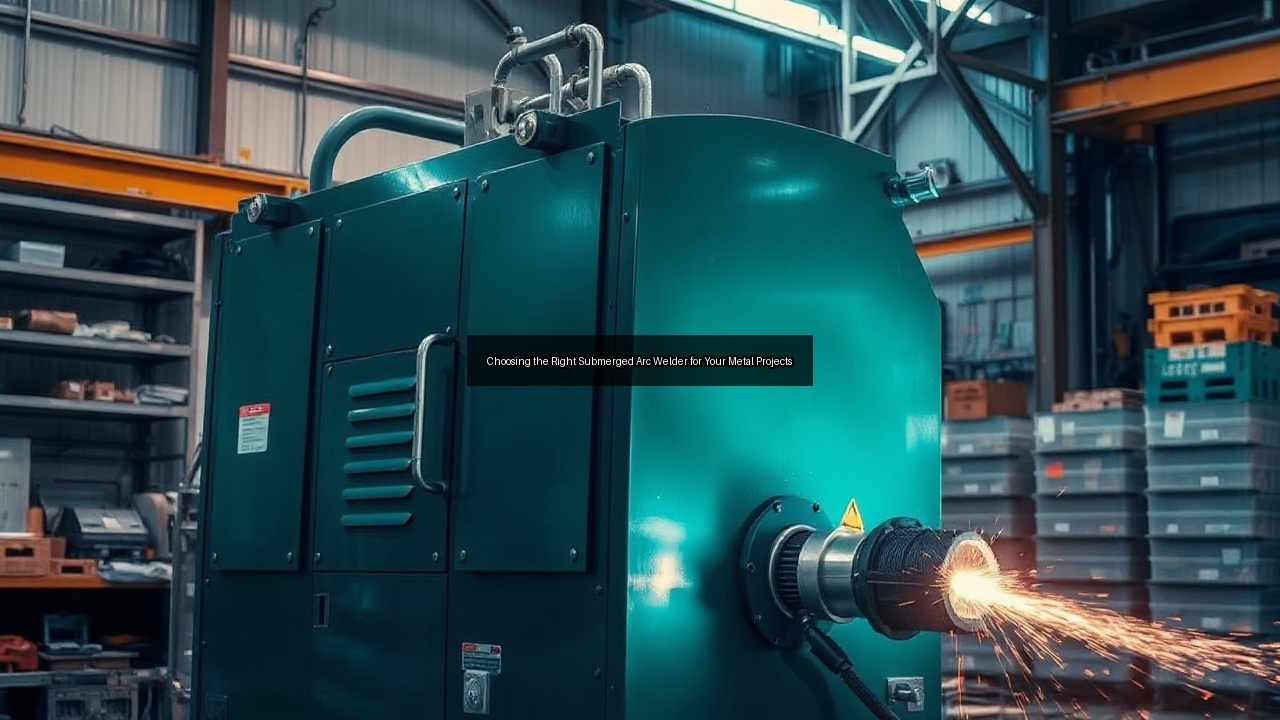
Submerged arc welding delivers deep penetration and high deposition rates by burying the arc beneath a layer of flux. A submerged arc welding machine feeds continuous wire electrode into the joint while flux shields the molten pool from atmospheric contamination. Operators track the process through the flux blanket rather than wearing heavy helmets, which improves visibility and consistency. This method suits thick plate fabrication where speed matters more than intricate positioning. Welders set parameters on the machine console to match material thickness and joint design, then the system maintains steady travel speed via tractors or manipulators. The result produces uniform beads with minimal spatter and excellent mechanical properties in carbon and low-alloy steels.
Advantages of Submerged Arc Welding
Submerged arc welding machines offer superior efficiency compared with SMAW or TIG processes. High current capacity allows deposition rates exceeding 20 pounds per hour on a single pass, reducing labor hours on large structures. The flux layer eliminates ultraviolet radiation exposure, so welders work comfortably without extensive shielding. Minimal smoke and spatter improve shop cleanliness and lower post-weld cleanup time. Consistent arc control produces welds with excellent toughness and ductility when proper electrode and flux combinations are selected. Fabricators also appreciate the process repeatability that automated tractors provide across long seams in pressure vessels and ship hulls.
Common Applications of SAW
Heavy fabrication shops rely on submerged arc welding equipment for longitudinal seams in storage tanks, structural beams, and rail cars. Pipe mills use the process for spiral and longitudinal welds on large-diameter transmission lines. Shipyards apply SAW to deck plates and bulkheads where high-strength low-alloy steels demand reliable fusion. Wind-tower manufacturers join thick plate sections rapidly with multiple-wire setups. Power-generation facilities choose the technique for boiler drums and turbine casings that require defect-free joints under high stress. Each application benefits from the process ability to weld thick sections in fewer passes than manual methods.
Key Features of Submerged Arc Welders
Power Supply Options: AC vs. DC
Submerged arc welding machines come in AC and DC configurations to suit different joint requirements. DC positive polarity delivers deeper penetration on carbon steels, while DC negative offers faster deposition on thinner materials. AC power reduces arc blow on magnetized plate and works well with multiple-wire setups. Modern machines let operators switch polarity at the control panel without rewiring. Voltage settings directly affect bead width and flux consumption, so welders adjust output according to electrode diameter and travel speed. Stable power delivery proves essential when welding stainless steel or nickel alloys that demand precise heat input control.
Electrode Types and Their Importance
Electrode selection determines weld metal chemistry and mechanical performance. Solid wires in coil form feed smoothly through the submerged arc welding machine and pair with specific flux grades for carbon, low-alloy, or stainless applications. Tubular wires add alloying elements for higher strength or corrosion resistance. Diameter ranges from 1/16 inch for narrow grooves to 5/32 inch for heavy fillets. Proper storage prevents moisture pickup that causes porosity. Welders match electrode grade to base metal specifications so the finished weld meets toughness and hardness requirements in demanding service conditions.
Understanding Flux and Its Role
Flux forms the protective blanket that defines submerged arc welding. Fused fluxes offer low moisture content and consistent particle size for stable arcs. Bonded fluxes allow higher alloy content and better slag removal on stainless steel. Neutral fluxes preserve base metal chemistry while active fluxes add manganese or silicon to improve toughness. Welders select flux based on joint cleanliness and required mechanical properties. Proper flux handling includes drying procedures that maintain low hydrogen levels and prevent cracking in thick sections or high-strength alloys.
Choosing the Right Submerged Arc Welding Machine
Factors to Consider: Voltage and Phase
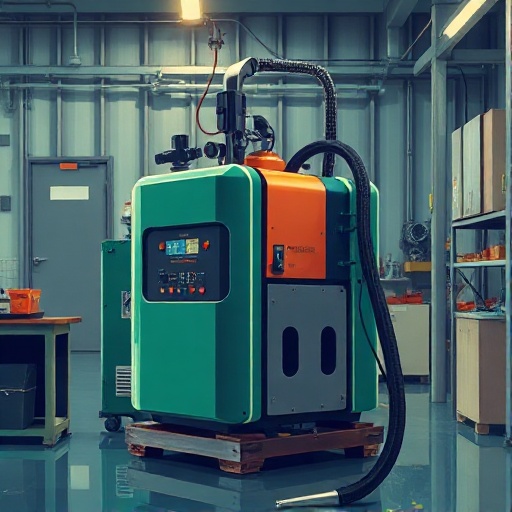
Voltage range and phase power determine machine suitability for shop or field use. Three-phase units deliver smoother output and higher duty cycles for continuous production. Single-phase models suit smaller shops with limited electrical service. Operators check input voltage compatibility before purchase because some machines require 460-volt supply while others operate on 230 volts. Digital controls allow precise voltage adjustment that directly influences penetration and bead shape. Machines with wide voltage windows accommodate both thin sheet and heavy plate without frequent hardware changes.
Weldability of Different Metals and Alloys
Submerged arc welding equipment handles a broad range of metals when electrode and flux combinations match base metal requirements. Carbon steels weld easily with standard wires and neutral fluxes. Low-alloy steels need specific alloys to maintain strength after heat treatment. Stainless steel demands controlled heat input and matching filler to avoid carbide precipitation. Nickel alloys require clean base metal and argon backing gas in some cases. Welders evaluate joint design and thickness first, then select parameters that achieve full penetration without excessive dilution of the weld metal.
Top Brands: ESAB and Beyond
ESAB submerged arc welding machines set the benchmark for reliability and feature depth. Their digital interfaces integrate with tractors for automated seam tracking. Lincoln Electric and Miller offer comparable systems with strong service networks across North America. European brands provide specialized models for pipe and pressure vessel work. Buyers compare warranty coverage, spare parts availability, and training support before committing. A well-supported brand reduces downtime when coil feeders or flux recovery units need service during high-volume production runs.
Submerged Arc Welding Techniques and Tools
Welding Equipment Essentials
Core equipment includes the power source, wire feeder, flux hopper, and travel carriage. Tractors maintain constant speed on long seams while manipulators handle circumferential welds on vessels. Contact tips and drive rolls require regular inspection to prevent wire slippage. Flux recovery systems collect unused material for reuse, lowering operating costs. Welders also keep spare contact tubes and nozzles on hand because wear affects arc stability. Proper setup of these components ensures consistent weld quality across multiple shifts.
Using Plasma Cutters for Prep Work
Plasma cutters prepare clean, square edges that improve joint fit-up before submerged arc welding begins. Precise bevels reduce the volume of weld metal required and minimize distortion. Portable units handle field repairs on heavy plate, while CNC tables produce repeatable parts for production. Operators adjust amperage and gas flow to match material thickness and achieve dross-free cuts. Clean edges allow tighter joint gaps that reduce flux consumption and improve fusion at the root.
Safety Considerations in Sub Arc Welding
Even though the arc stays submerged, operators must protect against hot flux splatter and slag. Leather aprons and gloves remain standard. Proper ventilation removes any fumes generated when welding coated or alloyed materials. Electrical safety requires grounded equipment and insulated cables rated for the machine output. Eye protection during slag removal prevents burns from flying particles. Shops enforce lockout procedures before servicing wire feeders or changing coils to avoid unexpected machine movement.
Maintenance and Efficiency of Submerged Arc Welders
Routine Maintenance Practices
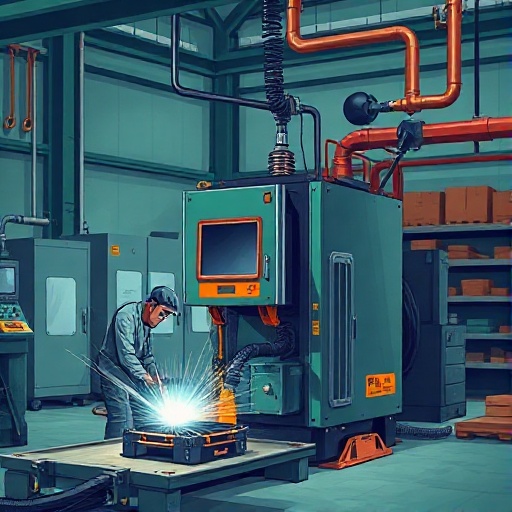
Daily inspections cover wire straighteners, drive rolls, and flux valves. Weekly checks verify calibration of voltage and amperage displays against known loads. Lubrication of tractor wheels and manipulator bearings prevents binding during long welds. Filter elements in flux recovery units need replacement on schedule to maintain suction. Documenting each service interval helps predict when consumables like contact tips will reach end of life, reducing unplanned downtime during critical fabrication schedules.
Improving Welding Efficiency
Multiple-wire configurations increase deposition rates without raising travel speed. Tandem setups with two electrodes side by side fill wider joints in a single pass. Optimized voltage and travel speed combinations reduce flux usage while maintaining bead profile. Automated seam tracking systems minimize operator intervention and scrap from misalignment. Shops track arc-on time versus total shift hours to identify bottlenecks in material handling or parameter setup that limit overall productivity.
Troubleshooting Common Issues
Porosity often traces to damp flux or contaminated plate edges. Increasing preheat or switching to a drier flux grade resolves most cases. Lack of fusion appears when voltage runs too low or travel speed exceeds wire feed rate. Adjusting the balance between amperage and travel speed restores sidewall fusion. Excessive spatter signals incorrect polarity or worn contact tips. Systematic checks of power supply output, ground connections, and consumable condition restore stable operation quickly and protect weld quality on critical structures.
See Also
- The Role of Flux in Enhancing Submerged Arc Welding Performance
- Understanding Power Supply Requirements for Optimal Submerged Arc Welding
- Exploring the Benefits of Submerged Arc Welding for Stainless Steel Applications
- Innovative Design Features of Today's Submerged Arc Welding Equipment
- A Beginner's Guide to Understanding Submerged Arc Welding Techniques