Choosing the Right Ceramic Backing for Your Welding Projects
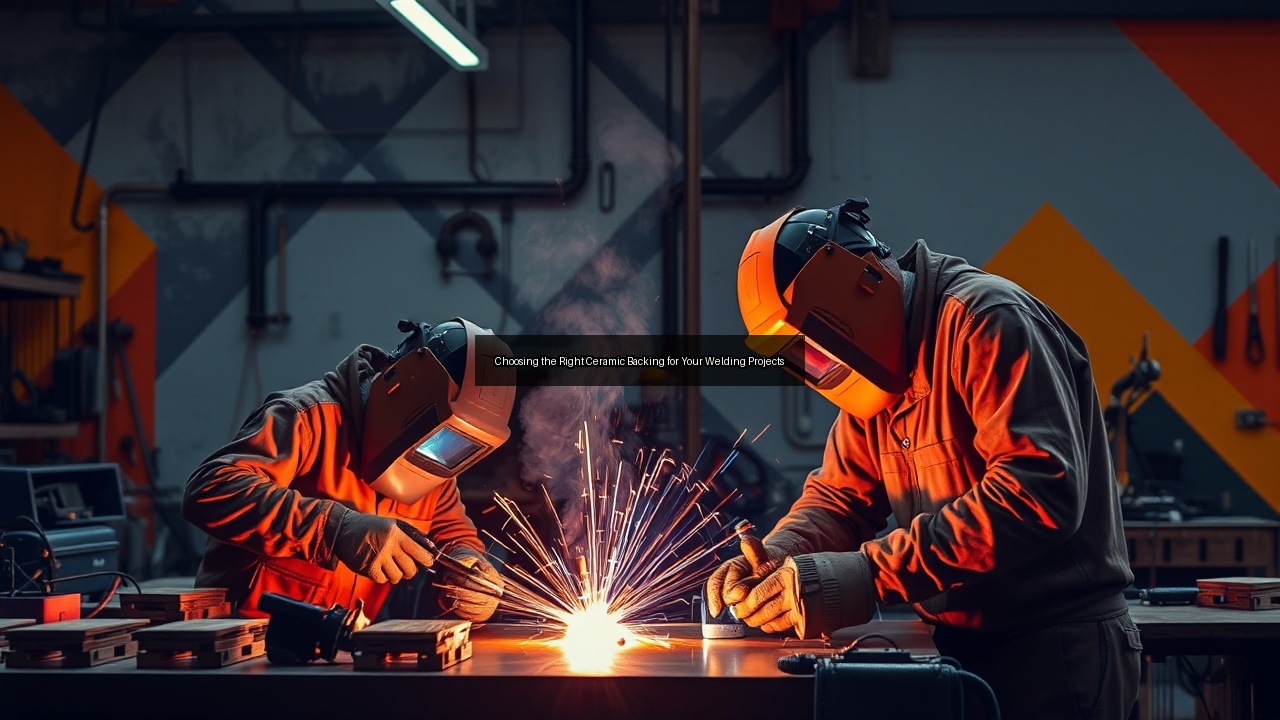
Understanding Ceramic Backing in Welding
What is Ceramic Backing?
Ceramic backing for welding consists of rigid strips or tiles placed behind the joint to support the molten pool and shape the root pass. These ceramics create a dam that prevents melt-through while allowing full penetration on open-root welds. Welders often select ceramic backing materials from suppliers such as Gullco International, whose KATBAK line provides consistent support across steel, aluminium, and stainless. The backing remains in place until the weld cools, then peels away cleanly. This method replaces traditional metal backing bars that require grinding or leave defects. Ceramic backing for welds delivers flat, uniform root beads without the need for back gouging in many cases. Professionals in marine fabrication and pressure vessel work rely on these materials to maintain code-compliant joints on pipes and plates up to 102mm thick.
Benefits of Using Ceramic Backing
Ceramic backing improves weld quality by controlling heat input and eliminating defects such as lack of fusion or excessive root reinforcement. Welders achieve X-ray quality results faster because the ceramic dam maintains consistent gap and prevents sagging. Productivity rises since operators skip back-side grinding and rewelding steps. The materials also reduce distortion on thin sections by distributing heat evenly. Gullco KATBAK products, for instance, offer high-temperature resistance that survives multiple passes without crumbling. In addition, ceramic backing materials minimize spatter adhesion, making cleanup quicker and safer. Fabricators report lower consumable costs over time because the same strips support several joints before replacement. These advantages make ceramic backing for welding a standard choice in structural, shipyard, and pipeline applications.
Common Applications in Welding
Marine constructors use ceramic backing for welding on hull seams and deck plates where access from both sides proves difficult. Pressure vessel shops apply the material to longitudinal seams in stainless and carbon steel to meet strict radiographic standards. Pipe welders rely on ceramic backing materials inside vessels and headers to support root passes on position welds. Aluminium fabricators choose specialized ceramics that resist cracking from high thermal conductivity. Structural steel erectors employ the backing on moment connections and column splices to speed field assembly. Aerospace and laser-hybrid operations also adopt ceramic backings for precise root control on thin gauges. Across these sectors, the technique replaces temporary metal fixtures and improves repeatability on repetitive joints.
Types of Ceramic Backing Materials
Overview of Ceramic Materials
Manufacturers produce ceramic backing materials from alumina, zirconia, and silica blends that withstand arc temperatures above 1500°C. These ceramics come in flat strips, angled profiles, and flexible tapes tailored to joint geometry. Voestalpine supplies high-purity grades for critical nuclear and chemical plant welds. Gullco International offers KATBAK tiles with adhesive backing for quick positioning. Standard products range from 25mm to 102mm widths to match common plate thicknesses. Some formulations include flux additives that improve wetting on stainless and duplex alloys. Welders select density and porosity levels based on whether the application involves single-pass or multi-pass techniques. The variety allows precise matching to base metal type and welding position.
Comparing Ceramic Backing Materials
Alumina-based ceramics deliver excellent thermal shock resistance and suit most carbon steel and low-alloy applications. Zirconia formulations handle higher heat and work well with stainless or nickel alloys that require longer hold times. Silica-rich backings provide lower cost for non-critical structural welds but may fracture under rapid cooling. Gullco KATBAK products stand out for their uniform thickness and clean release, reducing post-weld cleanup compared with generic tiles. Voestalpine materials emphasize purity for code work where inclusions cannot be tolerated. Flexible ceramic tapes outperform rigid strips on curved pipes or irregular geometry. Welders evaluate each option by testing root bead appearance, ease of removal, and compatibility with the chosen shielding gas.
Factors to Consider When Choosing Ceramic Backing
Joint design dictates width and profile; narrow grooves need slim strips while wide openings require broader support. Base metal thickness influences heat capacity—thicker sections demand denser ceramics that retain shape longer. Welding position affects adhesive strength because overhead and vertical work require secure attachment to prevent slippage. Environmental conditions matter too; outdoor marine sites prefer moisture-resistant grades. Compatibility with the torch and filler metal prevents unwanted reactions at the root. Budget constraints push some shops toward reusable tiles, while high-volume lines favor disposable options that speed workflow. Reviewing these variables ensures the chosen ceramic backing for welding matches project demands without compromising quality or safety.
Ceramic Backing and Different Welding Techniques
Ceramic Backing in TIG Welding
TIG welding benefits from ceramic backing because the precise arc control pairs well with the stable dam created by the material. Welders maintain consistent amperage on thin aluminium or stainless without burn-through. The backing allows single-sided access on pipes and tanks where mirror work would otherwise slow production. Gullco KATBAK strips positioned behind the joint keep the tungsten electrode at optimal distance while the root solidifies. Operators report smoother bead profiles and fewer tungsten inclusions. On critical aerospace components, ceramic backing materials help achieve the required penetration without excessive heat that could warp thin sections. Proper fit-up remains essential; gaps larger than 3mm may require additional clamping to hold the ceramic in place during the slow travel speeds typical of TIG.
Using Ceramic Backing for MIG and GMAW
MIG and GMAW processes run hotter than TIG, so ceramic backing must resist prolonged exposure without melting or outgassing. Fabricators place the material behind structural steel joints to support high-deposition spray transfer modes. The backing prevents excessive root reinforcement that would otherwise require grinding before subsequent passes. Gullco products with high-alumina content perform reliably under the intense arc forces of short-circuit and pulsed GMAW. Welders adjust travel speed and wire feed to match the thermal mass of the ceramic, ensuring the pool stays contained. On aluminium, specialized non-reactive ceramics avoid silicon pickup that could embrittle the weld. This combination of ceramic backing for welding and GMAW increases deposition rates while maintaining code-compliant root quality on pressure piping and heavy plate.
Application in Plasma Cutting
Plasma cutting often precedes welding, and ceramic backing materials protect the backside of plate during edge preparation. Operators position ceramics beneath the cut line to catch molten metal and reduce dross adhesion. This practice improves cut edge quality on stainless and aluminium, allowing direct welding without additional cleaning. Gullco KATBAK tiles rated for high heat serve double duty as both cutting support and welding backing. In automated plasma systems, the ceramics maintain consistent standoff and prevent warping on thin sheets. Marine repair teams use this method on hull plating to minimize distortion before fit-up. The same ceramic backing that supports the weld later also stabilizes the plasma arc, reducing the chance of incomplete cuts on thick sections.
Selecting the Right Ceramic Backing for Your Project
Assessing Project Requirements
Begin by reviewing weld procedure specifications for required root penetration, bead profile, and inspection criteria. Determine joint length and number of welds to calculate material quantity and whether reusable or disposable ceramics offer better economics. Consider base metal grade and thickness; high-strength steels may need zirconia ceramics to handle restrained joints. Factor in welding position and access limitations that could affect placement. Marine and offshore projects often require documentation of material traceability, steering selection toward certified suppliers such as Voestalpine. Review environmental conditions including wind, temperature, and humidity that influence adhesive performance. Clear project requirements guide the choice of ceramic backing for welding that meets both technical and schedule goals.
Geometry and Thickness Considerations
Joint geometry determines whether flat strips, V-profiles, or flexible tapes suit the work. Square butt joints on 6mm plate need narrow 25mm ceramics, while 102mm thick sections require wider support to contain the larger pool. Pipe diameter and wall thickness affect curvature; tight radii demand flexible backing that conforms without gaps. Thickness also influences heat sink effect—thicker metal pulls heat away faster, allowing slightly less dense ceramics. Welders measure root opening and bevel angle before ordering to ensure the backing fills the space without interfering with torch angle. Proper geometry matching prevents root suck-back or excessive reinforcement that could fail radiographic inspection.
Compatibility with Welding Techniques
Each process imposes different thermal and mechanical loads on the backing. TIG requires ceramics stable at low amperage yet able to handle preheat. MIG and GMAW need materials that resist the forceful droplet impact and higher currents. Plasma cutting applications favor ceramics with low thermal conductivity to limit edge melting. Laser-hybrid welding demands precise flatness to maintain beam focus. Compatibility extends to filler metals; certain ceramics release trace elements that interact with specific wires. Testing sample joints with the actual torch, gas, and parameters confirms the ceramic backing for welding performs as expected before full production begins.
Best Practices and Safety Considerations
Protective Gear for Welders
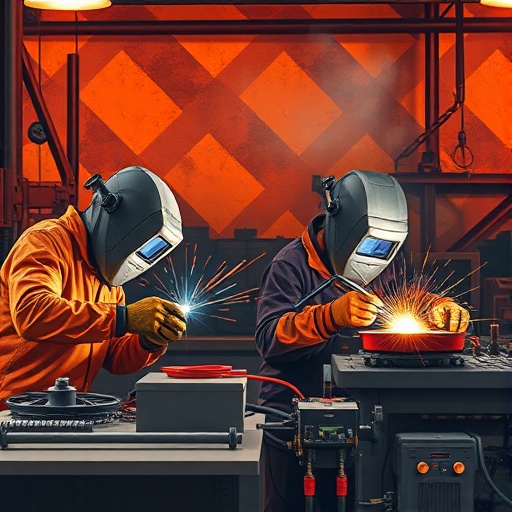
Welders must wear appropriate welding helmets with correct shade lenses to protect against intense arc light reflected from ceramic surfaces. Leather aprons and gauntlets guard against spatter that can bounce off the backing. Respiratory protection becomes important when grinding residual adhesive or when welding galvanized material near ceramics. Proper footwear prevents slips on shop floors where tiles may scatter. Gullco recommends inspecting KATBAK edges for sharp fragments before handling. Regular maintenance of welding helmets and other protective gear ensures consistent vision and reduces fatigue during long shifts involving ceramic backing installation.
Using Adhesives with Ceramic Backing
Adhesive-backed ceramics speed positioning but require surface preparation for reliable hold. Clean the metal of oil, rust, and moisture before application. Apply firm pressure along the full length to eliminate air pockets that cause detachment during welding. High-temperature adhesives withstand preheat up to 300°C without softening. On vertical or overhead joints, additional mechanical clips supplement adhesive until the first weld pass secures the backing. After welding, remove residue with approved solvents to avoid contamination on subsequent joints. Proper adhesive use prevents movement that could create lack-of-fusion defects at the root.
Automation and Welding Efficiency
Automation increases consistency when placing ceramic backing materials. Gullco’s KATBAK systems integrate with track-mounted carriages that position tiles ahead of the torch at constant speed. This setup reduces manual handling and improves joint alignment on long seams. Automation also allows precise control of travel speed and torch angle, minimizing variation in root bead appearance. In high-volume shops, robotic cells equipped with ceramic backing dispensers achieve higher arc-on time than manual methods. The combination of automated placement and ceramic backing for welding shortens overall cycle time while maintaining uniform quality across hundreds of identical joints.